Motorcycle crashes often result in significant physical, financial, and long-term consequences. Because riders lack the structural protection of passenger vehicles, injuries tend to be more severe and recovery periods longer.
Understanding what compensation may be available under New Hampshire law helps injured riders evaluate the full scope of their claim.
Medical Expenses
Medical costs are typically the largest component of a motorcycle accident claim. Emergency transport, hospital care, surgery, diagnostic imaging, medication, and rehabilitation can accumulate quickly. Many motorcycle injuries require ongoing treatment, including physical therapy, follow-up orthopedic care, and potential future procedures.
Compensation may include both current medical expenses and reasonably anticipated future treatment costs. Proper documentation and medical opinions are often necessary to establish the long-term impact of the injuries.

Lost Income and Reduced Earning Capacity
Motorcycle injuries frequently prevent riders from returning to work immediately. In cases involving fractures, shoulder repairs, spinal injuries, or head trauma, recovery may take months. Compensation may include wages lost during recovery.
If injuries permanently limit a rider’s ability to perform the same job or reduce long-term earning capacity, those future losses may also be considered. These calculations often require employment records and medical assessments regarding functional limitations.
Pain and Suffering
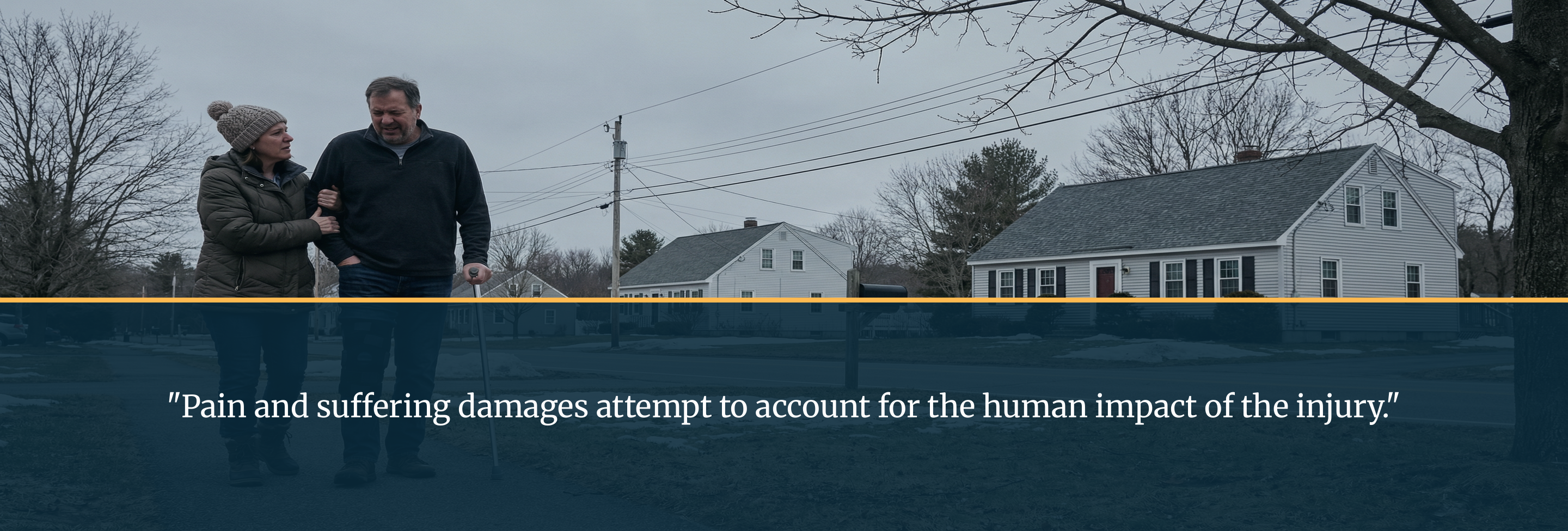
Beyond financial losses, motorcycle crashes often result in significant physical pain and lifestyle disruption. Pain and suffering damages attempt to account for the human impact of the injury. This may include chronic discomfort, limited mobility, emotional distress, and changes in daily activities.
Because motorcycle injuries are frequently serious, the non-economic component of a claim can be substantial. Insurance companies often evaluate these damages carefully and may attempt to minimize their significance.
Property Damage
Motorcycles themselves are often severely damaged or totaled in a crash. Compensation may include repair or replacement costs for the motorcycle as well as damaged riding gear such as helmets and protective equipment.
Factors That Influence Claim Value
Every motorcycle accident case is different. Compensation depends on factors such as the severity of injuries, clarity of liability, available insurance coverage, and the quality of supporting documentation.
Comparative fault can also affect the final recovery amount under New Hampshire law.
Understanding how motorcycle accident claims are developed and evaluated provides injured riders with a clearer picture of what may be recoverable and how insurers approach these cases.
If you were injured in a motorcycle crash in New Hampshire and have questions about what compensation may apply in your situation, gaining clarity early can help protect your financial recovery.
Call Buckley! for a free case evaluation.