After a car accident, most people assume the insurance company is just trying to pay as little as possible.
That is true. But that is not the whole story. Adjusters do not guess. They evaluate.
They review documentation. They measure credibility. They calculate risk. Then they decide what they think the claim is worth. If you understand what they are looking for, you can protect your case from the beginning.
Liability Comes First
Before the adjuster talks about injuries, they look at fault.
Police reports. Witness statements. Vehicle damage. Traffic citations. Sometimes video.
New Hampshire follows a modified comparative fault rule. If you are more than 50 percent at fault, you cannot recover damages. If you share fault, your recovery may be reduced.
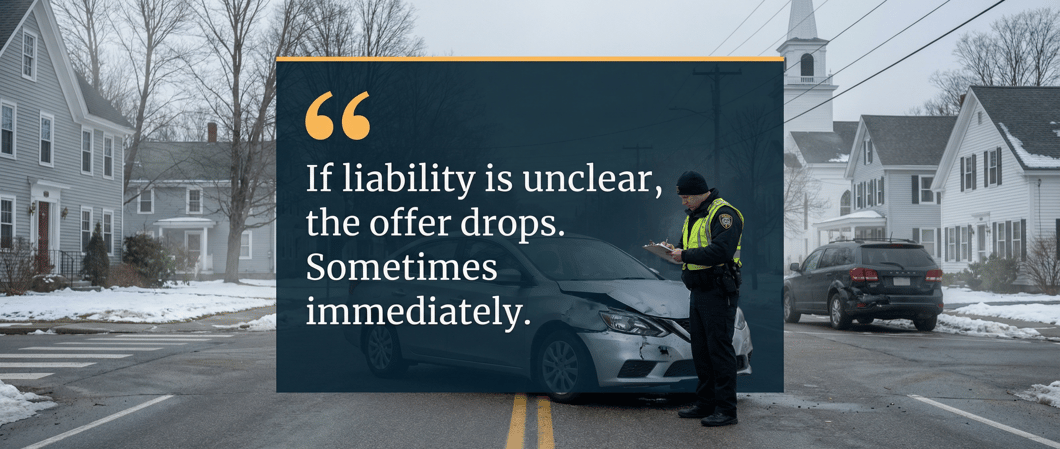
If liability is unclear, the offer drops. Sometimes immediately.
Medical Consistency Matters
Adjusters study the timeline. How soon you sought care. Whether treatment made sense. Whether you followed through. Whether there were gaps.
A clean timeline supports the claim. Gaps create doubt. Doubt lowers value.
Objective Findings Carry Weight
Pain is real. But insurers rely on what they can point to.
MRI results. EMG studies. X-rays. Surgical notes. Impairment ratings.
When symptoms match objective findings, the case is harder to discount.
When the file is mostly subjective complaints, the adjuster will push back.

Damages Must Be Organized
Medical bills are only one part of the evaluation. Adjusters also look at lost wages, time missed from work, and whether future treatment is likely.
If the financial side is vague, the offer stays low. If it is documented, the conversation changes.
Credibility Is Always Being Judged
Adjusters look for inconsistency.
Different versions of the crash. Different complaints in different records. Treatment that stops and starts. Prior injuries that were never disclosed.
The cleaner the record, the stronger the position.

Litigation Risk Drives Value
This is the piece most people miss. Adjusters evaluate whether the case could hold up in front of a New Hampshire jury.
They ask themselves whether the attorney will actually file suit, and whether the file is strong enough to survive pressure.
If the case is built like it is going to trial, negotiation changes. If it is not, the adjuster stays comfortable.
What To Do Now
Settlement numbers are not random. They are calculated based on documentation, credibility, and risk.
If you were injured in a New Hampshire car accident and want to understand how your claim will be evaluated, Buckley Law Offices can help you get clarity and protect your position.
Call Buckley! Right now.