On Behalf of Buckley Law Offices, P.C.
Quick Summary
The call from the other driver's insurance company comes faster than you expect. at times within hours of the crash. They sound friendly. They say they want to help you resolve everything quickly. What they actually want is a recorded statement, a low-ball settlement offer, and your signature before you understand what your injuries are worth.
The Call Comes Before You're Ready
Most people get contacted by an insurance adjuster within 24 to 72 hours of a crash. You might still be at the hospital. You might not know the full extent of your injuries yet. Whiplash, soft tissue damage, and traumatic brain injuries frequently don't show up fully for days, at times weeks.
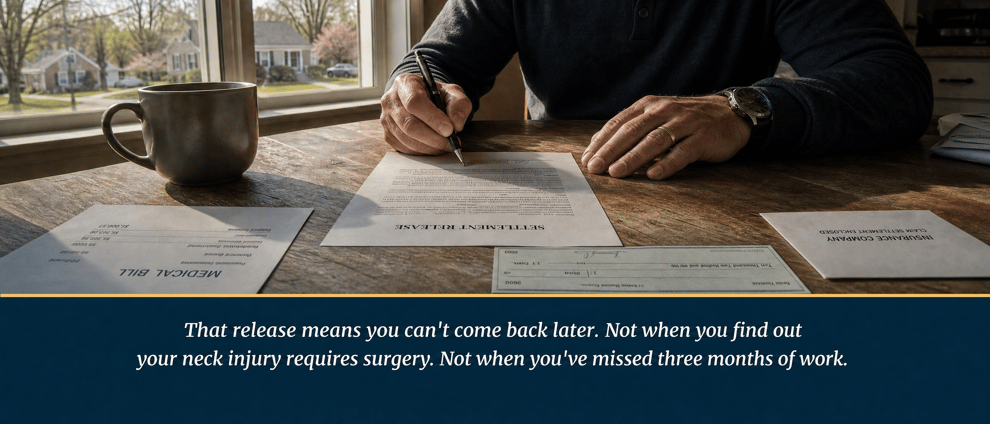
The adjuster knows this. They're calling precisely because this window is when you're most vulnerable. You're shaken up. You haven't spoken to a lawyer. You want the problem to go away. And they'll offer you money, frequently a small check, if you'll just sign a release right now.
That release means you can't come back later. Not when you find out your neck injury requires surgery. Not when you've missed three months of work. You signed, so they're done.
Recorded Statements Are Not Your Friend
One of the first things an adjuster will ask for is a recorded statement. They'll frame it as routine, necessary to process your claim. It is neither.
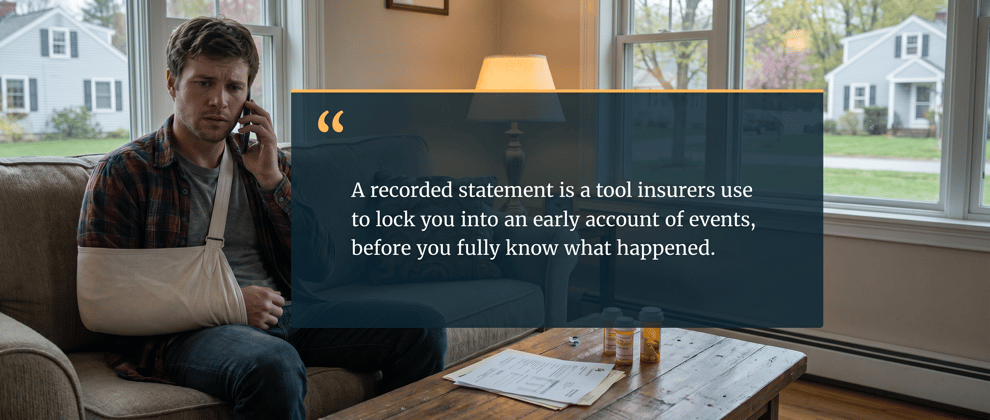
A recorded statement is a tool insurers use to lock you into an early account of events, before you fully know what happened, before you've had a chance to review the police report, and before you understand your injuries. Anything you say that contradicts your later account can be used to challenge your credibility.
In New Hampshire, you are not legally required to give a recorded statement to the other driver's insurance company. You have to cooperate with your own insurer under your policy terms, but the at-fault driver's insurer? You can decline.
They Look For Ways To Share The Blame
New Hampshire follows a modified comparative fault rule. If you're found to be 50% or more at fault for the accident, you recover nothing. If you're 30% at fault, your damages are reduced by 30%. Insurers know this rule. They use it.
When adjusters ask questions like "Were you driving fast on Route 3 that day?" or "Did you see the other car before impact?" they're not making small talk. They're looking for admissions that shift blame onto you. A single throwaway comment about being "a little distracted" can be used to reduce your settlement significantly.
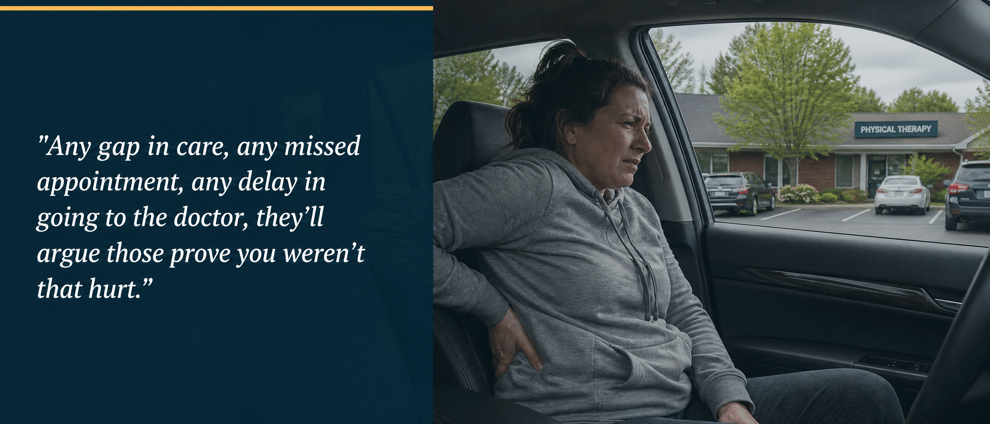
They'll also look at your driving history, whether you had any prior injuries to the same body parts, and whether you sought medical treatment immediately. Any gap in care, any missed appointment, any delay in going to the doctor, they'll argue those prove you weren't that hurt.
The Low Settlement Offer Playbook
If the liability is clear and they can't avoid paying, insurers move to the next phase: making you accept less than your case is worth.
They'll calculate your medical bills so far and add a small multiplier for "pain and suffering." They won't factor in future medical costs. They won't account for lost earning capacity if your injury affects your ability to work long-term. They won't include the full value of what you've been through.
Then they'll present the number as if it's generous. "We're offering you $8,500 today, that's more than most people get for cases like yours." Meanwhile, your back injury might require ongoing physical therapy for years.
Once you accept and sign, that's the end. No court. No negotiation. Done.
What You Should Do Right After A Crash In New Hampshire
Seek medical attention immediately, even if you feel fine. Delayed treatment is the number one argument insurers use to dispute injury claims. Go to an ER or urgent care in Nashua or Concord. Get it documented.
Do not give a recorded statement to the at-fault driver's insurer. Politely decline and tell them you'll be in touch. They can't force you.
Save everything. Photographs of the scene, the other car, your injuries. The police report number. Any texts or emails from insurers. Your medical bills and any out-of-pocket expenses.
Understand that the early settlement offer is almost never the right number. It reflects what the insurer hopes you'll take, not what your case is actually worth.
Call Buckley Before You Sign Anything
If you've been hurt in a car accident anywhere in New Hampshire, on the Everett Turnpike, the Daniel Webster Highway, or anywhere else, Dave Buckley can tell you exactly what your claim is worth and what the other side is trying to take from you.
You pay nothing unless you win. Call Buckley! Call (603) 595-8801