Motorcycle accident claims in New Hampshire are often more legally complex than standard car crashes. Two issues frequently surface in these cases: helmet use and comparative fault. Insurance companies examine both closely. Understanding how these laws work can prevent costly mistakes after a crash.
New Hampshire’s Helmet Law
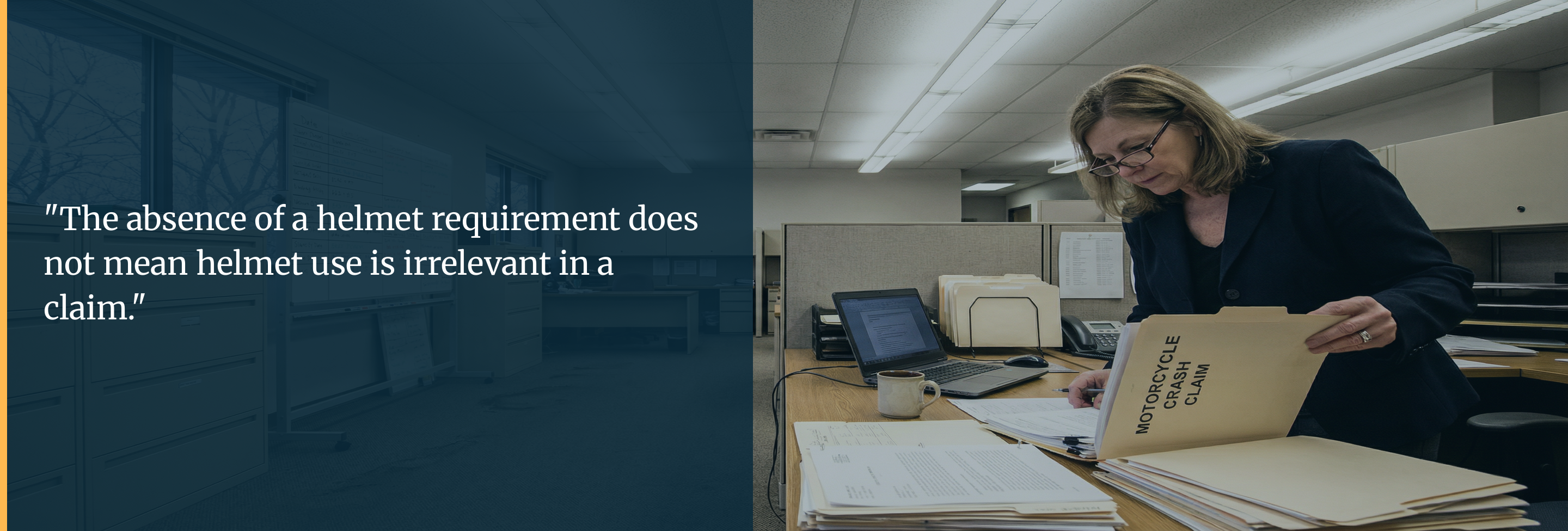
New Hampshire does not require adult motorcyclists to wear helmets. Riders under 18 must wear one, but adults are not legally obligated to do so. However, the absence of a helmet requirement does not mean helmet use is irrelevant in a claim.
Insurance companies may still argue that certain injuries would have been less severe had a helmet been worn. This argument typically arises in cases involving head trauma or facial injuries.
Whether that argument holds weight depends on medical evidence and the specific facts of the crash.

Comparative Fault in New Hampshire
New Hampshire follows a modified comparative fault system. If a rider is found less than 51 percent at fault, they may recover compensation. However, any recovery is reduced by the percentage of fault assigned.
If a rider is determined to be 51 percent or more responsible, recovery may be barred. In motorcycle crashes, fault is frequently disputed. Drivers often claim they did not see the motorcycle, that the rider was speeding, or that the rider contributed to the collision in some way.
These arguments can significantly reduce the value of a claim if not addressed strategically.
How Insurance Companies Use These Laws
Helmet use sometimes becomes part of a damages argument rather than a liability argument. A driver may be clearly at fault for causing the crash, but the insurance carrier may attempt to reduce the value of the claim by arguing that head injuries were worsened by not wearing a helmet.
Comparative fault arguments may also be introduced early to shift blame onto the rider. These tactics are common in motorcycle accident litigation because injuries tend to be severe and claim values higher.
Why Early Legal Strategy Matters
Motorcycle accident claims require careful analysis of crash reconstruction, medical records, and liability evidence. Adjusters often scrutinize motorcycle cases more aggressively than standard vehicle crashes.
Understanding how motorcycle accident claims are evaluated in New Hampshire allows injured riders to anticipate these arguments before they impact settlement discussions.
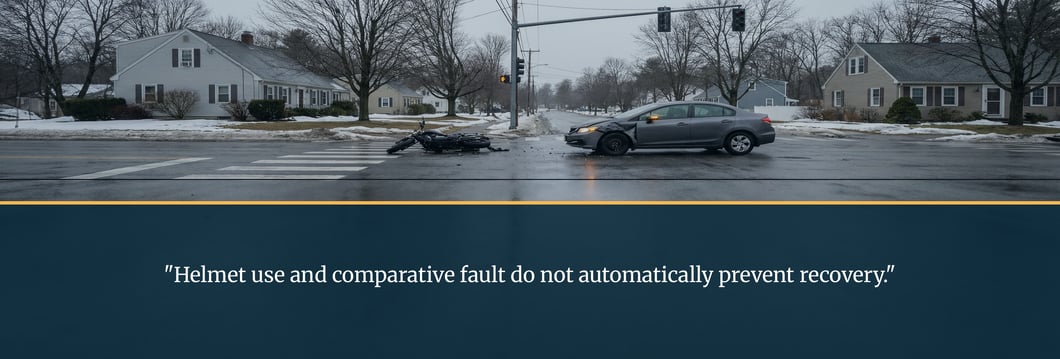
Helmet use and comparative fault do not automatically prevent recovery, but they must be handled correctly from the beginning.
If you were injured in a motorcycle crash and have questions about how these laws may affect your claim, early clarity can protect your rights.
Call Buckley! for a free case evaluation.