Motorcycles are far more vulnerable to road defects than passenger vehicles. A pothole that might cause a minor jolt in a car can throw a rider off balance or cause a complete loss of control.
In New Hampshire, road hazards such as potholes, loose gravel, uneven pavement, or construction debris can contribute to serious motorcycle crashes.
The key legal question becomes whether someone can be held responsible.
Motorcycle crashes caused by road conditions often involve sudden instability. A front tire striking a deep pothole can cause a rider to fishtail or flip. Loose gravel, particularly in construction zones or after winter freeze-thaw cycles, can reduce traction instantly.
Uneven pavement transitions or improperly marked road work can also create dangerous conditions for riders.
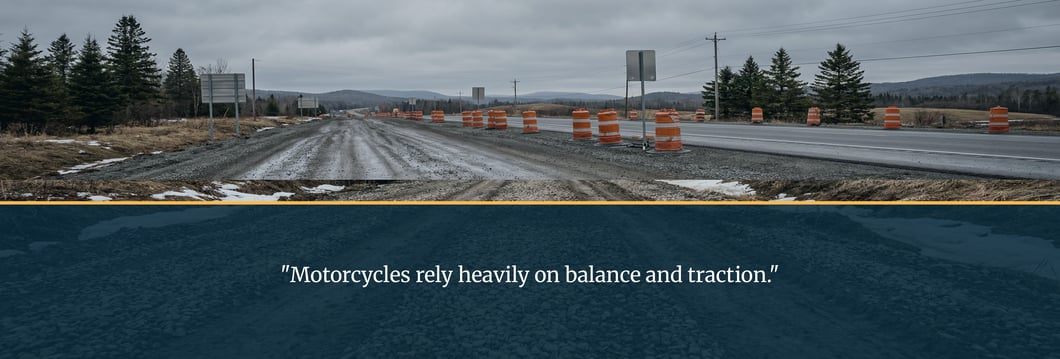
Because motorcycles rely heavily on balance and traction, even small roadway defects can have catastrophic consequences.
Determining Liability for Road Conditions
Not every road hazard leads to a valid claim. Liability depends on who controlled the roadway and whether there was notice of the dangerous condition. In some cases, a municipality may be responsible for maintaining safe road surfaces. In others, a private contractor performing construction work may bear responsibility.
These cases often require investigation into maintenance records, inspection logs, and whether reasonable steps were taken to address known hazards.
Government-related claims may also involve special notice requirements and shorter timelines. Missing those deadlines can affect the ability to recover compensation. That is why early investigation is critical in motorcycle accident cases involving road defects.
Evidence Is Critical in Road Hazard Claims
Unlike typical vehicle collisions where another driver’s fault may be obvious, road hazard cases depend heavily on documentation.
Photographs of the defect, measurements of pothole depth, skid marks, and witness statements can become essential evidence.
Conditions can change quickly once repairs are made. Without timely documentation, proving the roadway was unsafe becomes much more difficult.
Motorcycle accident claims often require reconstruction analysis to determine how the hazard directly caused the crash.
Understanding how motorcycle accident claims are built and evaluated under New Hampshire law helps injured riders see why evidence preservation matters so much in these cases.

Why Motorcycle Road Hazard Claims Are Challenging
Insurance carriers and municipalities may argue that the rider should have avoided the defect or was traveling too fast for conditions. Comparative fault arguments frequently arise in these cases.
The focus often shifts to whether the hazard was visible and whether a reasonable rider could have reacted differently.
Because motorcycle injuries tend to be severe, including fractures, shoulder injuries, and spinal trauma, these claims can involve significant medical damages. That increases the likelihood that liability will be aggressively contested.
If you were injured in a motorcycle crash caused by potholes, gravel, or unsafe road conditions in New Hampshire, understanding your legal options early can protect your ability to pursue compensation.
Call Buckley! for a free case evaluation.