On Behalf of Buckley Law Offices
Quick Summary
A rear-end crash may look minor from the outside and still create real injury problems. Vehicle damage is only one part of the file. Symptoms, medical timing, photographs, treatment follow-through, and the insurance company's effort to minimize the crash can all affect a Nashua rear-end accident claim.
Rear-end crashes get underestimated fast.
The bumper does not look destroyed. The vehicles can still move. Nobody leaves by ambulance. Everyone exchanges information and tries to get out of traffic.
Then the next morning is different.
The neck is stiff. The headache is worse. The back pain did not fade. Turning the head while driving feels harder than it should.
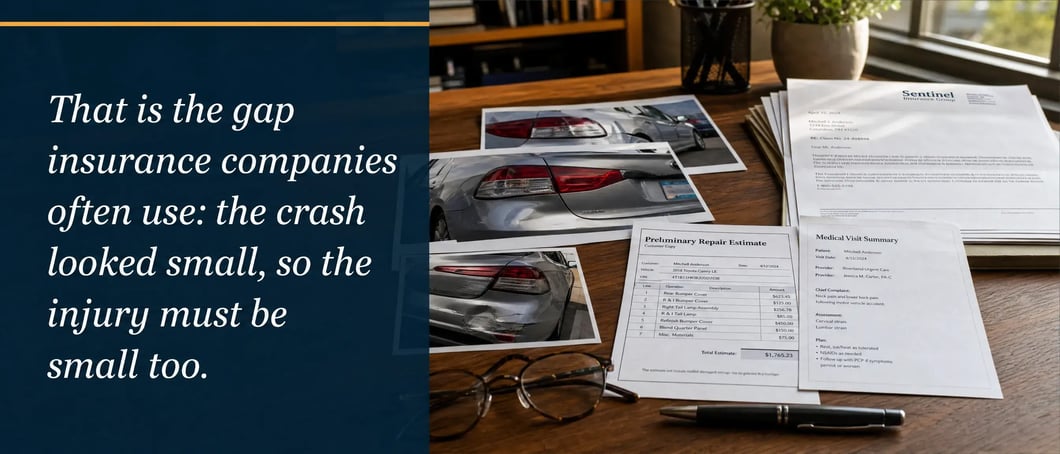
That is the gap insurance companies often use: the crash looked small, so the injury must be small too.
Buckley Law Offices does not look at rear-end crashes that way. In a New Hampshire rear-end accident, the damage photo matters, but it is not the whole file.
Vehicle Damage Does Not Tell the Whole Story
The outside of a vehicle can make a crash look simple.
That does not mean the injury is simple.
Rear-end crashes can involve sudden acceleration and deceleration, awkward body position, turned heads, bracing, and delayed symptoms. A person may feel embarrassed at the scene and say they are fine because adrenaline is doing its job.
The insurance company may still point to the bumper.
That is why the record needs to show more than the bumper.
Delayed Symptoms Need to Be Documented
Delayed symptoms are common in rear-end crashes.
That does not make them legally automatic. It makes documentation important.
The first medical visit should accurately identify what hurts, when it started, and whether symptoms are changing. Follow-up care should be consistent. If the person is having headaches, numbness, range-of-motion problems, sleep issues, or pain that affects work, those details should not be left out.
The insurer may treat every delay as a reason to question the claim.
The answer is not exaggeration.
The answer is accuracy.
A Typical Rear-End Problem
A Nashua driver is stopped in traffic near the Everett Turnpike when another vehicle hits the back of her car. She is sore but tells everyone she is okay because the rear bumper only looks scratched. By Monday, her neck pain has spread into headaches, but she waits until Thursday to get checked because work is busy and she does not want to overreact. The insurer now has a neat argument: minor damage, no same-day care, and a late complaint.
That sequence is common.
It is also avoidable.
Early Photos Should Show More Than the Dent
In a rear-end crash, useful photos may include:
- the rear damage
- the front damage to the other vehicle
- vehicle positions
- traffic conditions
- the lane where the crash happened
- skid marks or debris
- weather
- nearby signs, traffic lights, or intersections
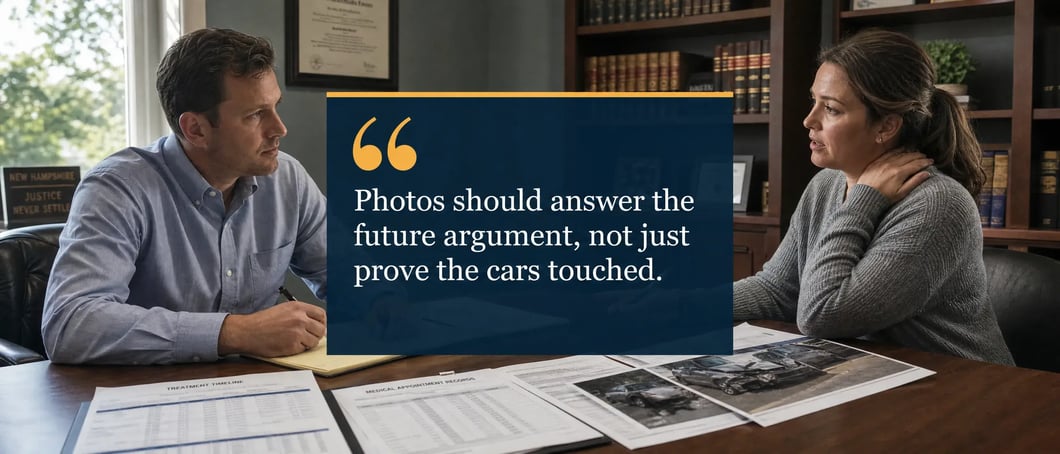
Photos should answer the future argument, not just prove the cars touched.
If the insurance company later says the crash was too minor to cause injury, the broader scene may help explain force, traffic, speed, and context.
Medical Record Need Follow-Through
Dave Buckley has emphasized that injured people should seek treatment within 24 hours when symptoms are present and identify every pain point.
That matters in rear-end cases because symptoms can develop in stages.
The first record may mention neck pain. The next visit may clarify headaches, shoulder symptoms, or lower back pain. Therapy notes may show range-of-motion limits or difficulty with normal tasks.
When the care is consistent, the file can show development instead of confusion.
When the care is spotty, the insurer gets room to argue.
The Insurance Company May Minimize the Claim Early
Rear-end crashes often invite a familiar insurance position:
`This was a low-impact collision.`
That phrase sounds objective. It may not be.
The real question is what happened to the person, what the medical records show, and whether the crash facts support the injury timeline.
Buckley Law Offices reviews rear-end claims with that full picture in mind. The firm looks at liability, injury documentation, treatment consistency, available insurance, and whether the case should be resolved or prepared for a stronger posture as part of the broader auto accident review.
Not Every Rear-End Crash Is a Major Case
Candid advice matters here.
Some rear-end crashes cause no injury. Some soreness resolves quickly. Some cases have weak facts or treatment gaps that change the strategy.
But a crash should not be dismissed only because the vehicle damage looks modest.
The file has to be reviewed before the insurer's version becomes the only version.
The Better Question to Ask
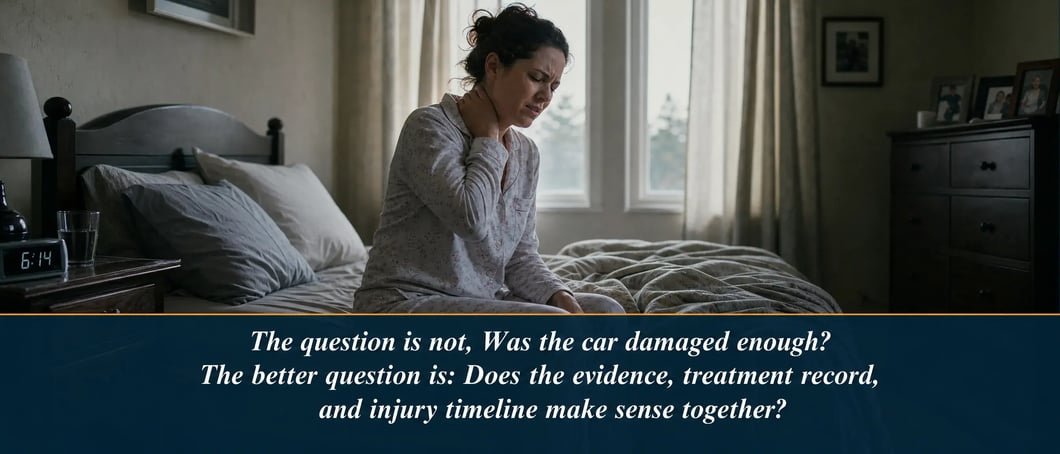
The question is not, "Was the car damaged enough?"
The better question is:
`Does the evidence, treatment record, and injury timeline make sense together?`
That is where Buckley Law Offices starts.
If you were rear-ended in Nashua and symptoms are not resolving, Call Buckley at (603) 595-8801.