On Behalf of Buckley Law Offices
Quick Summary
Medical treatment after a Nashua car accident matters for health and for the injury claim. Early evaluation, accurate symptom reporting, and consistent follow-up help create a timeline before the insurance company builds its own version. Buckley Law Offices looks closely at treatment timing because gaps and incomplete records can become avoidable claim problems.
People often wait after a crash for a very human reason.
They hope the pain will fade.
They do not want to miss work. They do not want to spend the evening in urgent care. They do not want to sound dramatic when they can still walk, drive, or make dinner.
That instinct is understandable.
It can also give the insurance company exactly what it needs.
In a Nashua car accident claim, medical treatment is not just about proving injury. It is about creating a timeline that still makes sense when the insurer starts asking why the person waited, why the symptoms changed, or why the records do not mention a pain point that later became important.
The First Medical Record Sets the Tone
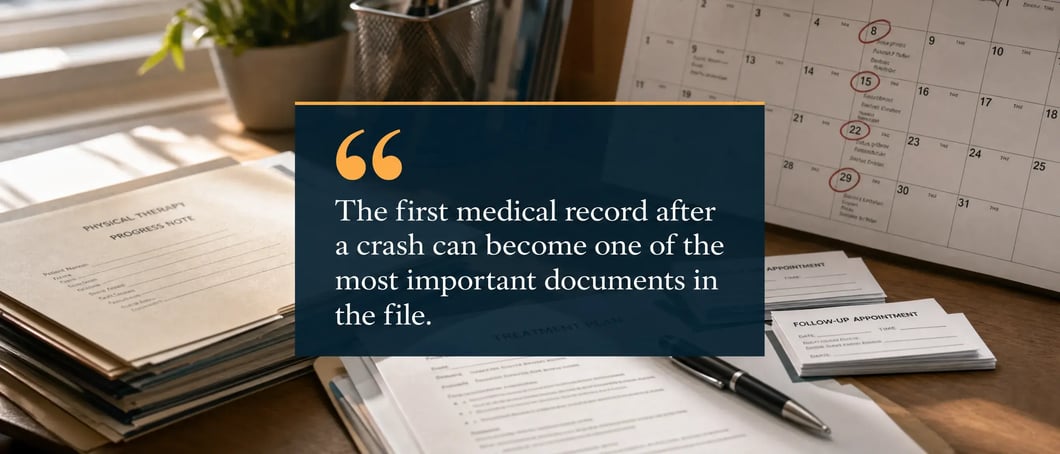
The first medical record after a crash can become one of the most important documents in the file.
It may show:
- when pain began
- what body parts were affected
- whether symptoms were getting worse
- whether headaches, numbness, dizziness, or radiating pain were present
- what follow-up was recommended
- whether the crash was identified as the cause
If that record is vague or incomplete, the insurance company may treat later details as new complaints instead of developing symptoms.
That is why Dave Buckley's guidance is straightforward: if you are hurt, get medical treatment within 24 hours and identify every pain point, even if something only hurts a little.
Being Accurate Is Not the Same as Exaggerating
Some injured people underreport symptoms because they do not want to look like they are making a claim.
That can be a mistake.
If the shoulder hurts a little, say that. If the headache started later in the day, say that. If the neck pain is manageable but building, say that. If you are not sure how bad it is yet, say that too.
Accuracy protects the record.
The point is not to make the injury sound worse. The point is to keep the record from making it sound like the injury did not exist.
Treatment Gap Create Easy Arguments
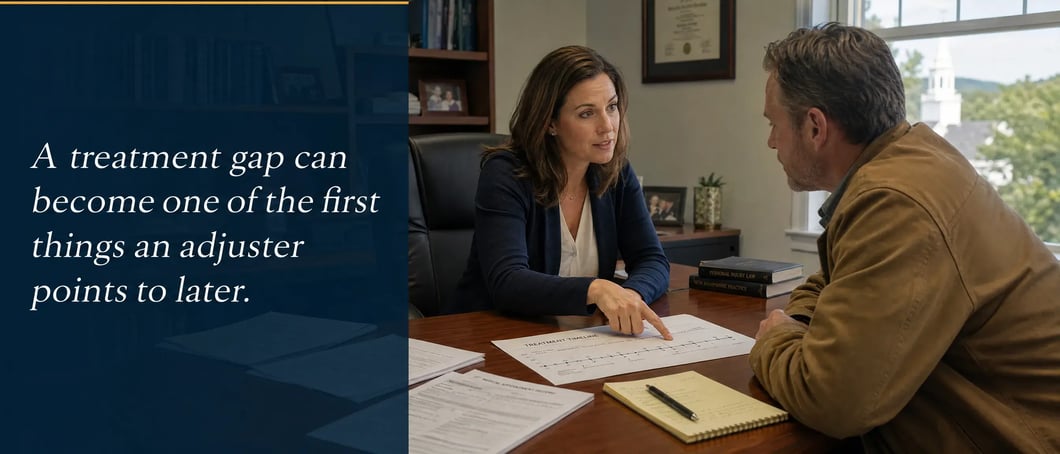
Insurance companies pay attention to gaps.
They may look at how long it took to get checked, whether appointments were missed, whether therapy was stopped early, or whether there were long stretches without follow-up.
Sometimes there are good reasons for gaps: work, transportation, childcare, scheduling delays, or cost concerns.
But if the record does not explain the gap, the insurer may use it.
Buckley Law Offices calls clients at least every 15 days while they are treating. That process exists for a practical reason: staying connected helps reduce treatment gaps and helps clients stay on track while the medical picture develops.
A Realistic Treatment-Timing Problem
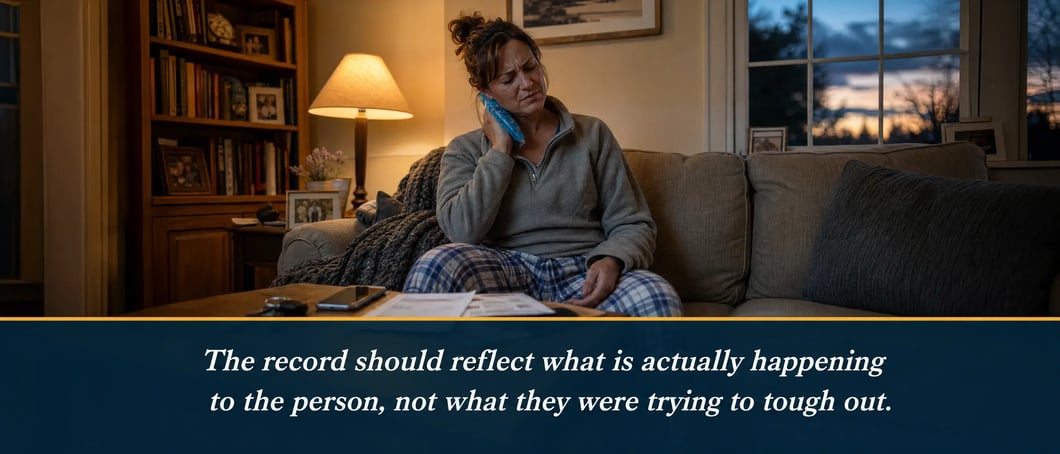
A driver is hit on Main Street and feels stiff but not injured enough to make a fuss. She works the next two days, uses ice at home, and waits until the pain starts affecting sleep before making an appointment. By the time the first record is created, a week has passed and the note only mentions neck pain, not the headaches that started on day three. The injury may be legitimate, but the file now has two problems: delay and an incomplete first record.
That is the kind of ordinary sequence Buckley tries to prevent.
Not because every case becomes litigation.
Because the file should not be weaker than the facts.
The Value Question Comes Later
Many injured people want to know what the case is worth early.
The honest answer is that case value usually cannot be determined until treatment has ended or the medical picture is much clearer.
The reason is simple: no one can fairly value an injury without understanding diagnosis, treatment, recovery, permanency, work impact, pain, limitations, and future care if any is needed.
A rushed value conversation can pressure a person into decisions before the injury is understood.
Consistent Care Helps Tell A Clearer Story
Consistent care does not mean unnecessary treatment. It means following reasonable medical recommendations and keeping the record connected.
That may include:
- primary care evaluation
- urgent care or emergency care
- specialist referrals
- physical therapy
- imaging when medically appropriate
- follow-up appointments
- keeping discharge instructions and treatment notes
In a New Hampshire auto accident case, that consistency can help show how the crash
Medical Records Should Reflect Daily Life Too
The injury record is not only diagnosis codes.
If pain is affecting work, driving, sleep, childcare, household tasks, or basic movement, those details may matter in a car accident claim. They should be discussed accurately with medical providers and documented when appropriate.
That does not mean turning every appointment into a legal statement.
It means not leaving out the practical ways the crash changed the person's life.
The Goal Is a Record That Makes Sense
Buckley Law Offices does not need every injured person to arrive by ambulance.
The firm does need the file to make sense.
That means symptoms, evaluation, follow-up, and documentation should line up with what actually happened. When they do, the insurance company has less room to rewrite the timeline.
If you were hurt in a Nashua car accident and are unsure how treatment timing may affect your claim, Call Buckley at (603) 595-8801.