On Behalf of Buckley Law Offices
Quick Summary
The strongest evidence after a Nashua car crash is often the evidence gathered before anyone knows how hard the insurance company will push back. Photos, medical records, witness information, video footage, vehicle damage, police reports, and insurance documents can all matter. The goal is to preserve the record before delay gives the insurer room to minimize the crash or the injury.
Evidence disappears quietly.
A witness forgets the color of the light. A nearby business records over camera footage. The damaged vehicle gets repaired. The pain that felt manageable on day one becomes harder to connect because treatment did not start until day six.
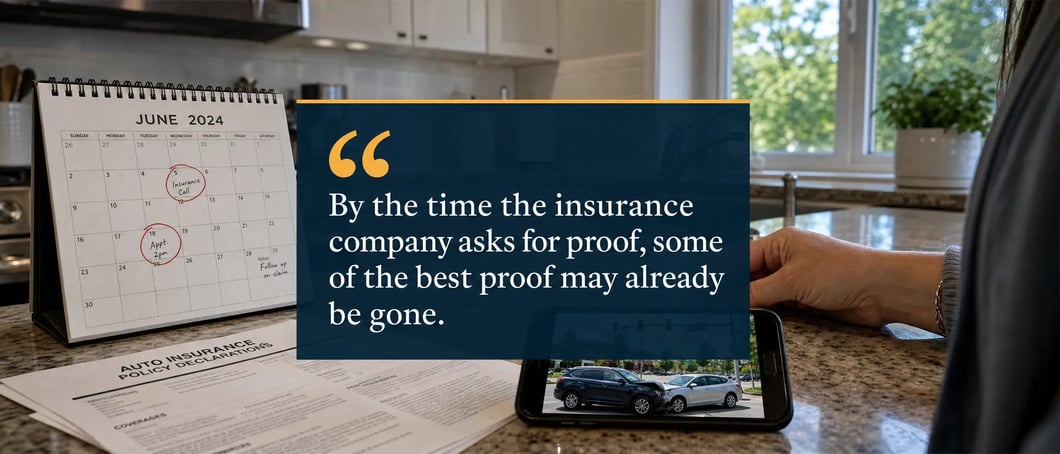
By the time the insurance company asks for proof, some of the best proof may already be gone.
That is why evidence matters after a Nashua car accident. It is not just about showing that a crash happened. It is about keeping the insurance company from turning missing details into doubt.
Scene Evidence Should Tell the Story Later
Most people take one or two close-up pictures of the damage and think they are done.
Take wider pictures.
The useful record may include:
- vehicle positions
- lane markings
- traffic lights and signs
- skid marks or debris
- weather and road conditions
- property damage
- impact angles
- the surrounding intersection or roadway
Close-up damage photos show contact. Wide photos help explain how the crash happened.
That difference can matter when someone who was not there later tries to make the crash sound smaller, simpler, or less forceful than it was.
Medical Evidence Creates the Injury Timeline
Medical records do more than list injuries.
They create a timeline.
If the first record says neck pain, headaches, shoulder pain, back pain, or numbness within a day of the crash, that file looks different than one where the first detailed complaint appears two weeks later.
That does not mean delayed symptoms are fake. Many injuries do not fully show themselves at the scene.
It does mean the insurance company will study the gap.
Dave Buckley's guidance is practical: if symptoms are present, get checked within 24 hours and identify every pain point, even if something only hurts a little. The first record should reflect the real picture, not the polite version someone gave at the scene.
Witnesses And Video Need Fast Attention
Witness evidence does not stay fresh.
A driver who stopped may leave without giving a full name. A passenger may remember something different after a few weeks. A business camera may keep footage for only a short time before recording over it.
A realistic evidence review asks:
- who saw the crash?
- are there homes or businesses nearby?
- did any vehicle have a dash camera?
- did police identify witnesses?
- is there traffic or parking-lot video?
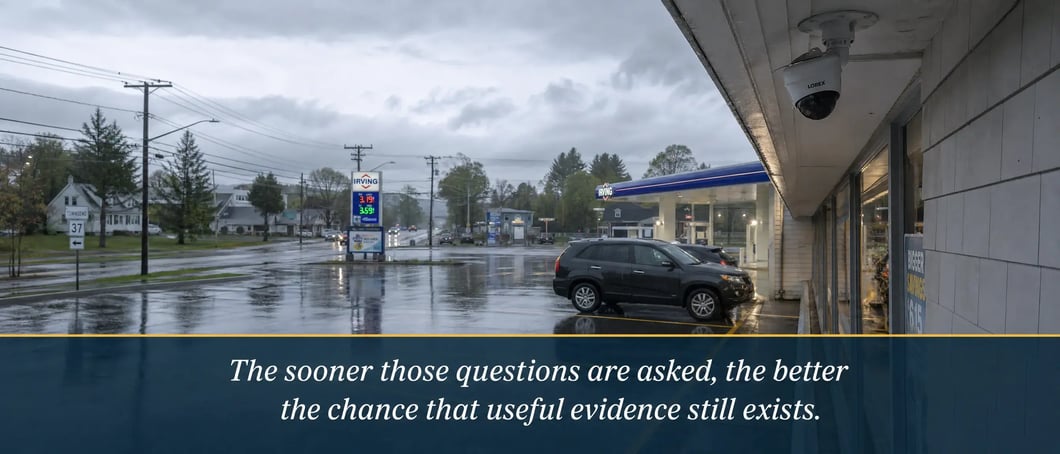
The sooner those questions are asked, the better the chance that useful evidence still exists.
A Small Miss Can Become a Big Argument
Imagine a driver hit near Amherst Street on a rainy afternoon. He takes a picture of the dented rear bumper but not the slick pavement, the traffic backup, the lane where the other driver came from, or the nearby gas station camera. Two weeks later, the other driver's insurer says the impact was light and questions why his back pain required follow-up care. The missing pictures do not mean he is wrong. They just make the argument easier for the insurer.
That is the real problem.
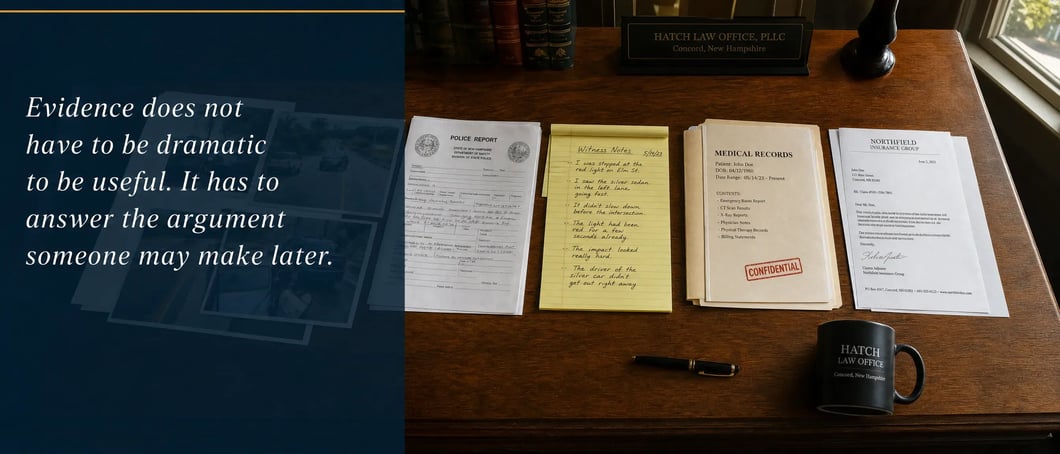
Evidence does not have to be dramatic to be useful. It has to answer the argument someone may make later.
Insurance Evidence Can Change the Strategy
After a crash, the evidence is not only physical.
Insurance documents matter too.
Buckley Law Offices may need to review the at-fault driver's policy, the injured person's own policy, medical payments coverage, uninsured or underinsured motorist coverage, health insurance issues, and any releases the insurer wants signed.
In a serious auto accident claim, knowing the coverage picture early can affect settlement strategy, timing, and whether more investigation is needed.
Police Reports Help, But They Are Not the Whole Case
A police report can be useful in a car accident claim. It may identify drivers, witnesses, citations, location, and the officer's initial understanding of what happened.
But a police report is not the whole case.
It may not capture delayed symptoms. It may not include every witness. It may not show video sources or later medical findings. It may also contain errors that need to be addressed.
Treat the report as one part of the record, not the entire record.
The Strongest Evidence Is Usually Organized Evidence
A file does not become stronger because it contains a pile of disconnected documents.
It becomes stronger when the documents explain the sequence:
- crash
- symptoms
- evaluation
- follow-up treatment
- work and daily-life impact
- coverage review
- settlement position
That is why Buckley Law Offices focuses on the record early. The goal is not to overwhelm the insurer with paper. The goal is to make the facts harder to minimize.
If you were injured in a Nashua crash and are not sure what evidence needs to be preserved, Call Buckley at (603) 595-8801.