On Behalf of Buckley Law Offices
Quick Summary
The first days after a Nashua car accident can shape the claim before the injured person knows how serious the injury is. Medical timing, photographs, witness details, vehicle damage, insurance coverage, and adjuster conversations can all become part of the record. Buckley Law Offices helps injured people protect that record before ordinary gaps are used to minimize what happened.
The crash may be over in seconds.
The claim is not.
In the first few days after a Nashua car accident, most people are trying to do normal things under abnormal pressure. They need the car moved. They need to call work. They may need to pick up a child, schedule medical care, arrange transportation, and answer insurance questions before they feel clear enough to make decisions.
That is exactly when the file starts forming.
A Nashua driver may not think of photographs, medical records, witness names, and policy limits as legal evidence yet. The insurance company will. The early record often becomes the story the insurer uses later to decide whether the crash was serious, whether treatment was timely, and whether the injury fits the damage.
Buckley Law Offices looks at auto accident cases through that practical lens. The goal is not to make the crash sound worse than it was. The goal is to keep the insurance company from making it sound smaller than it is.
Start With Medical Care, Not Toughing It Out
After a crash, many injured people try to be reasonable.
They say they are fine because they can still walk. They wait to see whether the soreness fades. They avoid urgent care because they do not want to overreact. They mention the worst pain but leave out the smaller symptoms because they think those details will not matter.
That instinct is understandable.
It can also make the claim harder.
Dave Buckley's personal injury guidance is direct: if symptoms are present, get medical treatment within 24 hours and identify every pain point, even the ones that seem small.
That does not mean exaggerating. It means being accurate.
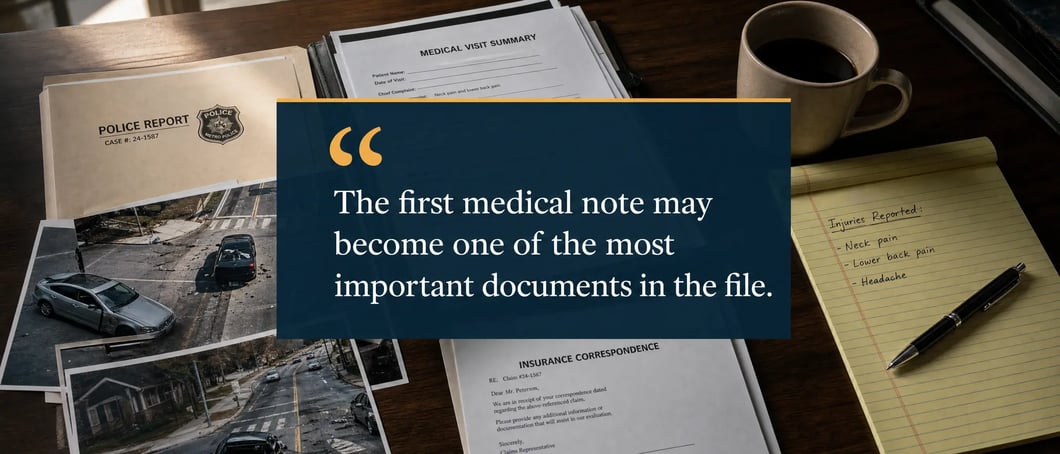
The first medical note may become one of the most important documents in the file. If it leaves out headaches, shoulder pain, numbness, back stiffness, dizziness, or sleep disruption, the insurance company may later argue that those symptoms appeared too late to be connected to the crash.
Photograph More Than the Damage
Vehicle damage matters, but it is not the whole picture.
If it is safe to do so, useful photographs may include:
- vehicle positions before they are moved
- damage from several angles
- debris on the road
- skid marks or the lack of them
- traffic lights, stop signs, lane markings, and weather conditions
- visible injuries
- the surrounding intersection, driveway, parking lot, or roadway
A photograph of a bumper does not always explain the angle of impact. A close-up of a dent may not show where the vehicles were. A wider photo may help connect the damage to the roadway, the turn, the lane, or the traffic pattern.
That context can matter later in a car accident claim, especially when the insurer tries to reduce the crash to a repair estimate.
Get Witness and Video Information Early
Evidence disappears before most people realize they need it.
A witness gets back in the car. A nearby business records over video. A vehicle gets repaired. The other driver changes the story. The injured person remembers one detail clearly but loses another because the week after the crash is filled with appointments, calls, pain, and logistics.
That does not mean every crash needs a lawsuit.
It means the first few days should be treated with care.
If a witness stopped, get the name and phone number. If a nearby business may have a camera, write down the location. If a police report was created, keep track of how to request it. If the crash happened near a familiar Nashua road or intersection, note the details while they are still fresh.
The goal is to preserve what may matter before it is gone.
Be Careful with Insurance Conversations
The other driver's insurance company may sound routine at first.
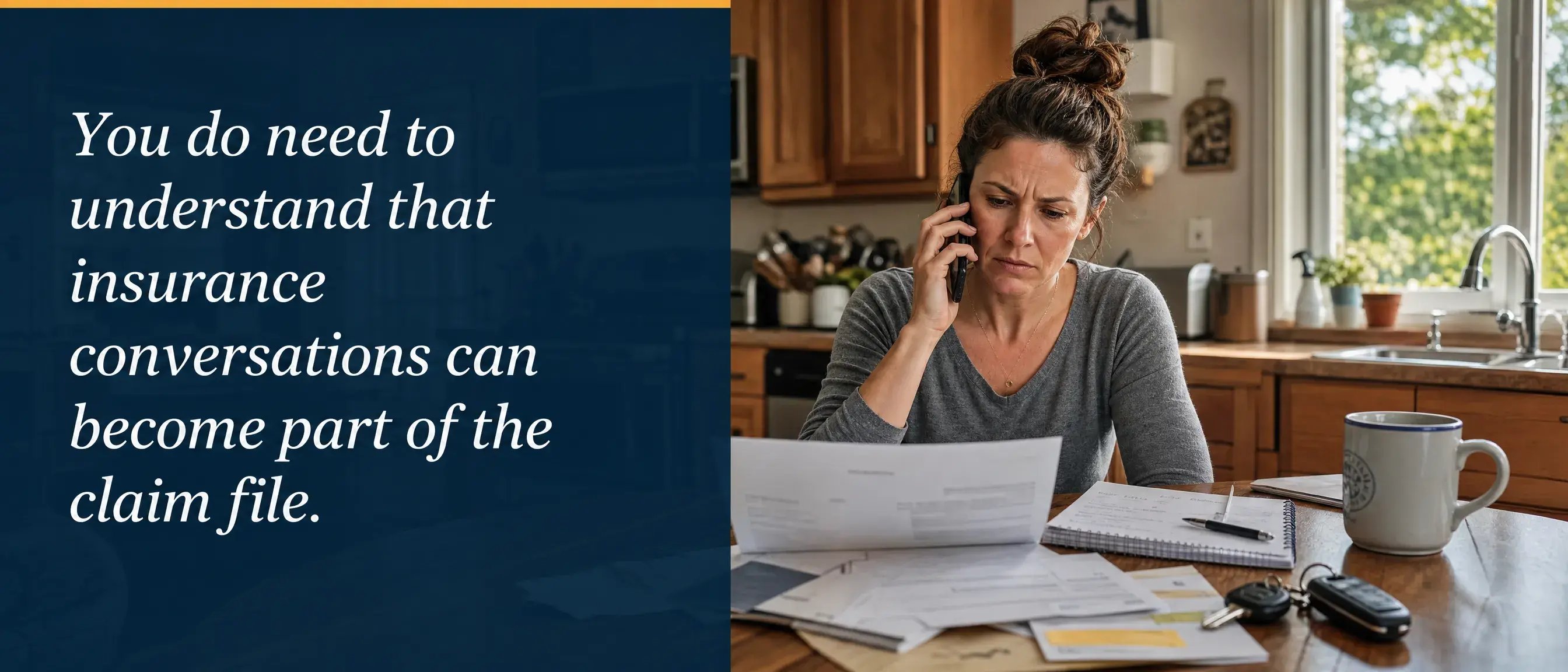
They need your statement. They need a few details. They need to know whether you are injured. They may ask how you feel before you have seen a doctor or before delayed symptoms have fully developed.
That timing matters.
A polite answer like "I think I am okay" may later be quoted as if it were a medical conclusion. A quick description of the crash may leave out details that matter. A recorded statement may happen before the injured person understands the treatment plan, the coverage picture, or the full effect of the crash.
You do not need to panic.
You do need to understand that insurance conversations can become part of the claim file.
Check The Coverage Picture Before Signing Anything
Fault is only one part of the claim.
Coverage may be just as important.
If the at-fault driver has no insurance or too little insurance, the injured person's own policy may need to be reviewed. Medical payments coverage, uninsured motorist coverage, underinsured motorist coverage, health insurance, liens, and available policy limits can all affect the next step.
Before signing a release, the available insurance picture should be understood.
That is especially important when the crash involves serious injuries, multiple vehicles, a hit-and-run driver, a commercial vehicle, or an at-fault driver with minimal coverage.
A Normal Delay Can Become an Insurance Argument
Consider a Nashua driver rear-ended near Daniel Webster Highway on a Friday afternoon.
At the scene, she is sore but wants to get home. She tells the officer she thinks she will be fine. Over the weekend, neck pain and headaches get worse. She takes over-the-counter medication, rests, and waits until Tuesday to call her doctor.
The injury may be real.
The file is just harder than it needed to be.
By Tuesday, the adjuster has an easy argument: no ambulance, no same-day treatment, several quiet days before the first medical note, and an early statement that sounded less serious than the symptoms later became.
That is why the first days matter. Not because every delay ruins a claim. Because ordinary delays can give the insurance company a cleaner way to minimize one.
Call Buckley Before the Insurance Company Calls You
Early review after a New Hampshire crash should usually include:
- how the crash happened
- what photographs and reports exist
- whether witnesses or video may be available
- when symptoms started
- when treatment began
- whether every pain point was identified
- whether follow-up care is consistent
- what insurance coverage may apply
- whether the at-fault driver has enough coverage
Buckley Law Offices prepares injury claims around evidence, treatment, coverage, and fair value. That work often starts long before anyone is talking about filing suit.
For people hurt in Nashua or elsewhere in New Hampshire, the first question is not whether they are being tough enough.
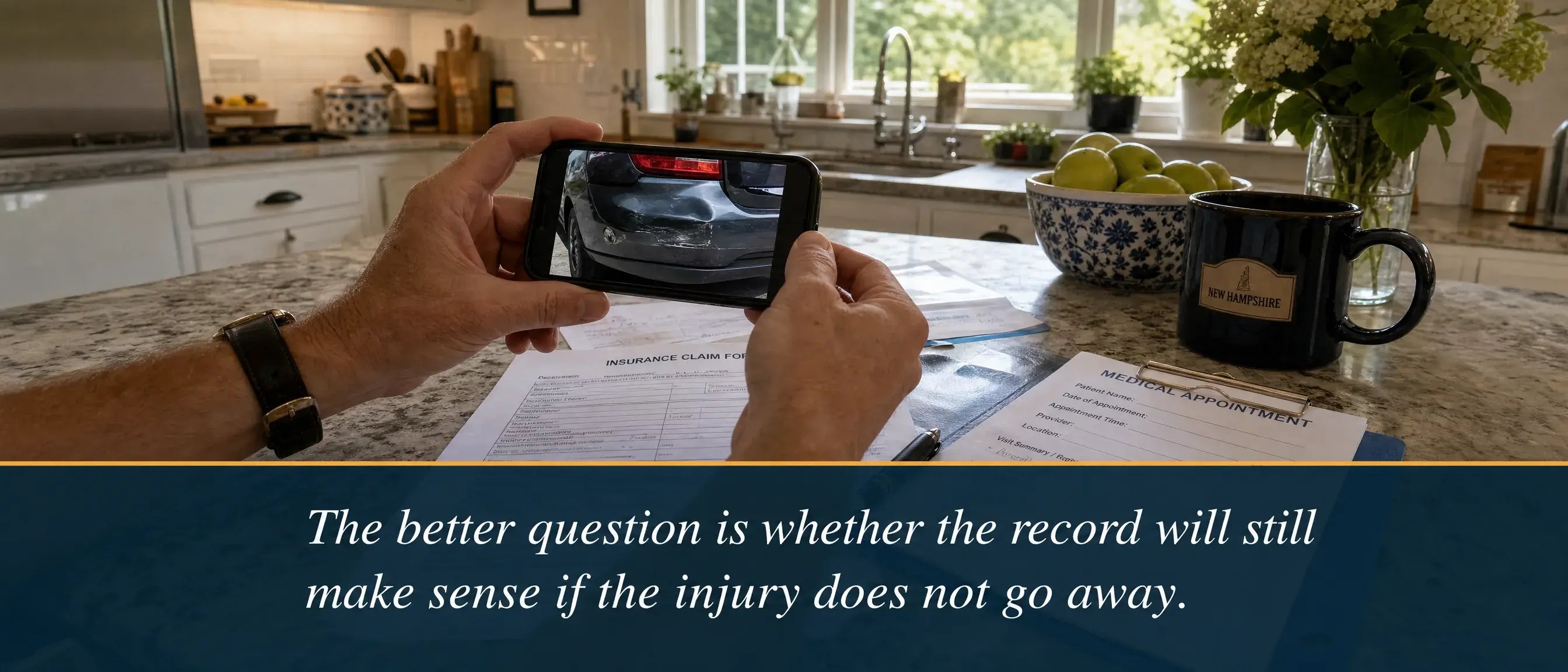
The better question is whether the record will still make sense if the injury does not go away.
If you were hurt in a Nashua or New Hampshire crash and need help understanding the next step, Call Buckley at (603) 595-8801.